
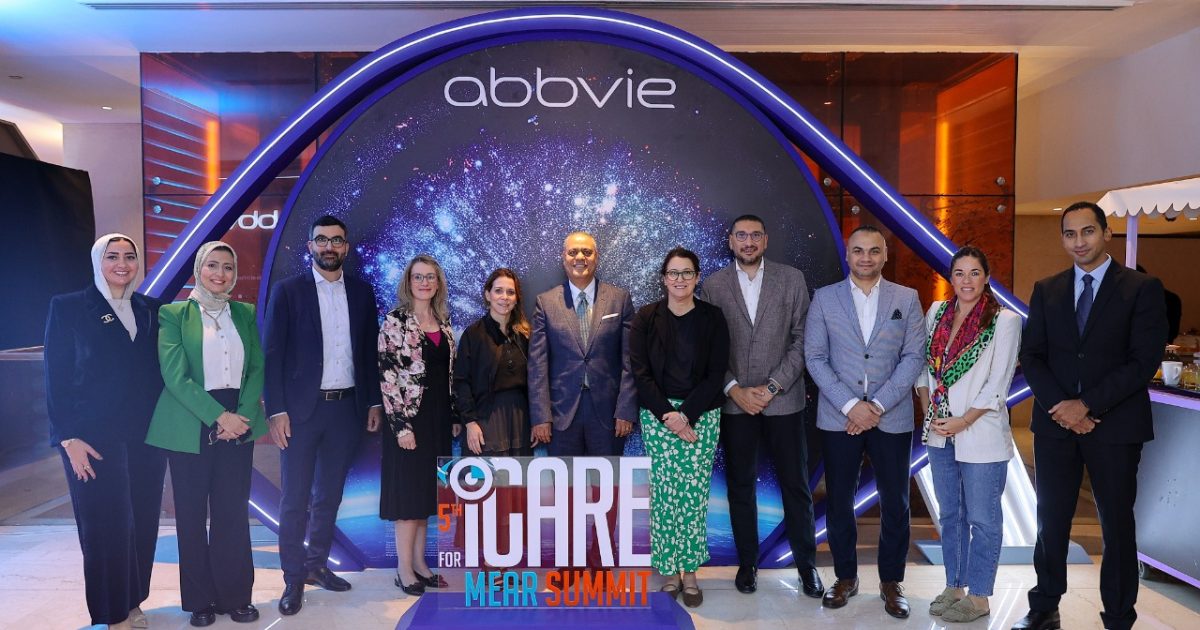
The 5th Eye Care Summit for the Middle East, Africa, and Russia (MEAR) region, under the patronage of AbbVie, the global biopharmaceutical research and manufacturing company, As always, the summit brought together a select group of professors, consultants, and ophthalmologists from the region to discuss the latest developments in ophthalmology and address unmet patient needs. This gathering, in turn, provided a wonderful opportunity to interact with many ophthalmologists from various subspecialties in one place. The conference included several lectures and workshops, aiming to integrate knowledge and expertise and convey the latest updates in the field of ophthalmology.

Dr. Hani Hamza, MD Professor of Eye Surgery at Faculty of Medicine Cairo University, Egypt, emphasized that the 5th Eye Care Conference represents a leading summit showcasing the latest developments in ophthalmology. He added that the conference discussed the unmet needs of current care for patients with diabetic macular edema (DME), a common complication of diabetes affecting the eye and a leading cause of vision impairment and loss among adults with diabetes. This condition is one of the most prominent complications of diabetic retinopathy, indicating the damage to the microvessels in the eye caused by long-term elevated blood sugar levels. Participants also emphasized that interpreting biomarkers from optical coherence tomography (OCT) scans in patients with DME has become a cornerstone in guiding accurate treatment decisions. Relying on OCT biomarkers is no longer a luxury; it is a necessary step in understanding the nature of the disease and each patient’s individual response to treatment.
Dr. Ahmed Shabana, Glaucoma Specialist at Al Zahra Hospital Dubai, participated in the workshop titled “Bridges Between Glaucoma and Retina Specialists,” where he addressed collaborative approaches to managing patients with complex, overlapping ocular conditions. Additionally, Dr. Shabana delivered a dedicated presentation on the “Impact of Glaucoma Therapy on Ocular Surface Disease (OSD),” highlighting recent findings on how different glaucoma treatments can affect the health of the eye’s surface, and emphasizing the importance of tailored therapy strategies to optimize overall patient outcomes.
Dr. Shabana expressed his appreciation for the summit’s role in bringing together leading experts from across the region, stating that such events are invaluable for sharing the latest advancements and clinical practices. He highlighted that the collaborative discussions and knowledge exchange at the summit contribute significantly to enhancing patient care standards in ophthalmology.
For his part, Dr. Amro Abukhashabah, Assistant Professor and vitreoretinal Consultant from King Abdulaziz University, highlighted the essential role of sharing experiences and best practices among ophthalmologists from across the region in the management of diabetic macular edema (DME). He explained that the summit’s interactive workshops provided participants with hands-on exposure to the latest clinical practices and treatment protocols specifically for DME. These sessions facilitated the exchange of expertise on how to approach diagnosis, and design tailored treatment strategies for patients with DME. Dr. Abukhashabah emphasized that collaborative learning and the sharing of real-world experience are vital for elevating the standard of care, enabling ophthalmologists to deliver more effective and individualized treatment for patients suffering from diabetic macular edema.
In this context, Professor Matías Igliki, eye surgeon (Retina surgery), Argentina, welcomed the scientific value of the lectures discussed at the conference, such as the role of inflammation in the pathogenesis of DME and RVO. He explained that managing eyes that have undergone vitrectomy poses subtle technical challenges, but recent advances in medications and optical analysis now allow for more precise and effective treatment plans. He also addressed the role of dexamethasone implant as an effective treatment option for “naive” eyes that have not received previous treatment, versus treatment-resistant eyes, and emphasized the need to focus on designing specific treatment strategies for eyes that have or have not undergone vitrectomy.
In addition to the scientific sessions, the event included interactive workshops that discussed advanced topics such as “Relapsed DME patient cases”, “Bridges Between Glaucoma and Retina Specialists,” and “Integrating Evidence-Based Management of Uveitic Macular Edema into everyday clinical practice.”
The conference concluded by emphasizing the importance of exchanging clinical and research expertise among physicians and developing innovative treatment protocols that keep pace with accelerating discoveries in ophthalmology. The organizers emphasized that this event is part of a series of ongoing scientific initiatives aimed at raising medical awareness and updating the skills of healthcare practitioners, contributing to improving patients’ quality of life.